I: (OVERVIEW)
ROLE
UX/UI Designer
DESCRIPTION
A Telegram Mini App for trading on event outcomes using Polymarket liquidity. Users can open their own positions, copy other traders’ trades, and analyze events with AI.


II: (CHALLENGE & ROLE)
CHALLENGE
Design a prediction market app for Telegram from scratch. The mobile interface needed to bring together event discovery, trading, and automated copy trading while keeping amounts, limits, and transaction statuses clear.
MY ROLE
I worked on UX/UI and communication materials alongside another designer. We shared the workload, developing user flows in the designs and preparing interfaces, components, and states for development.
We received requirements and feedback through project coordinators. Throughout the process, we worked with the team to clarify transaction logic and how the interface should respond to limits and errors.
Start with the amount to invest
The market catalog groups events by topic. On an event’s detail page, users can review outcomes, current prices, the chart, and resolution rules.
The main input when buying is the amount the user wants to invest. The number of shares is calculated automatically, while the fee, total cost, and potential payout are shown before confirmation.


Funding from Portals
Portals users can fund their Portex account directly from their balance without an intermediate transfer through an external wallet. Before confirmation, the interface shows the transfer amount and conversion estimate.

IV: (COPY TRADING)

From choosing a trader to managing copied trades
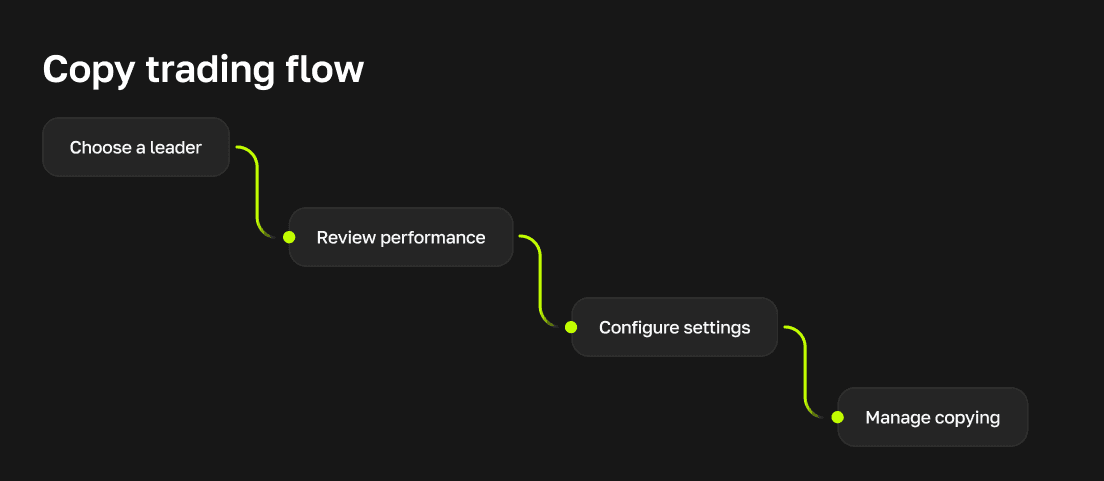
Copy Trading automatically replicates a selected trader’s trades. We designed the complete flow: finding a leader, evaluating their performance, configuring the copy settings, and monitoring subsequent trades.

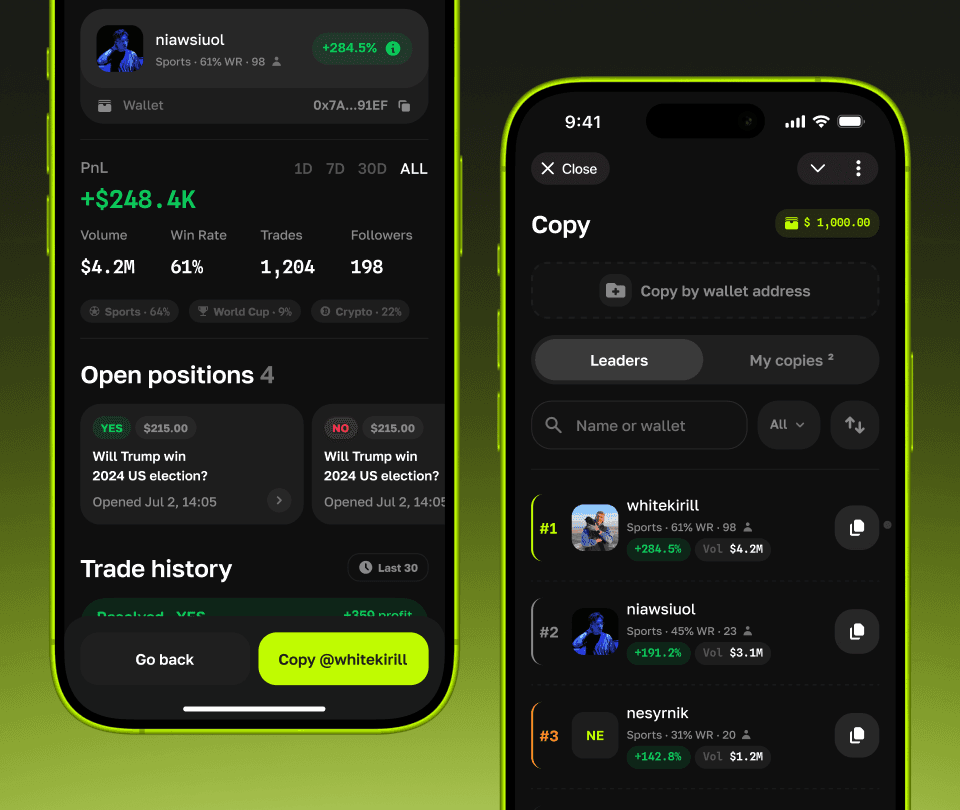
Choosing a leader
The leader list includes search, sorting, and performance metrics for a selected period. A trader’s profile shows their results, open positions, and trade history. Users who already know which trader they want to copy can start setup using the trader’s wallet address.

Configuring copy trading
Users can choose a fixed amount or a percentage of the leader’s trade. Percentage mode also includes a maximum amount per copied trade.
Exit rules and entry filters are organized into expandable sections: users set the main parameters first, then refine the limits. If the balance is insufficient, the interface prompts them to add funds or reduce the amount.
Monitoring execution
The performance of the user’s copied trades is shown separately from the leader’s statistics. The log displays executed trades, trades skipped due to configured limits, and execution errors.
Manual pauses, daily budget limits, and insufficient balances each have their own explanation. Users can see why copying has stopped and whether it will resume automatically or require action.

V: (POSITION MANAGEMENT)
From opening a position to settlement
The portfolio brings together active and closed positions, results, and transaction history. Position cards show the amount invested, current value, and potential payout. Active positions can be sold before an event ends.
After an event ends, funds may remain unavailable until final settlement. For this period, we designed a pending status, an explanation of the frozen amount, and a view of the processing stages.
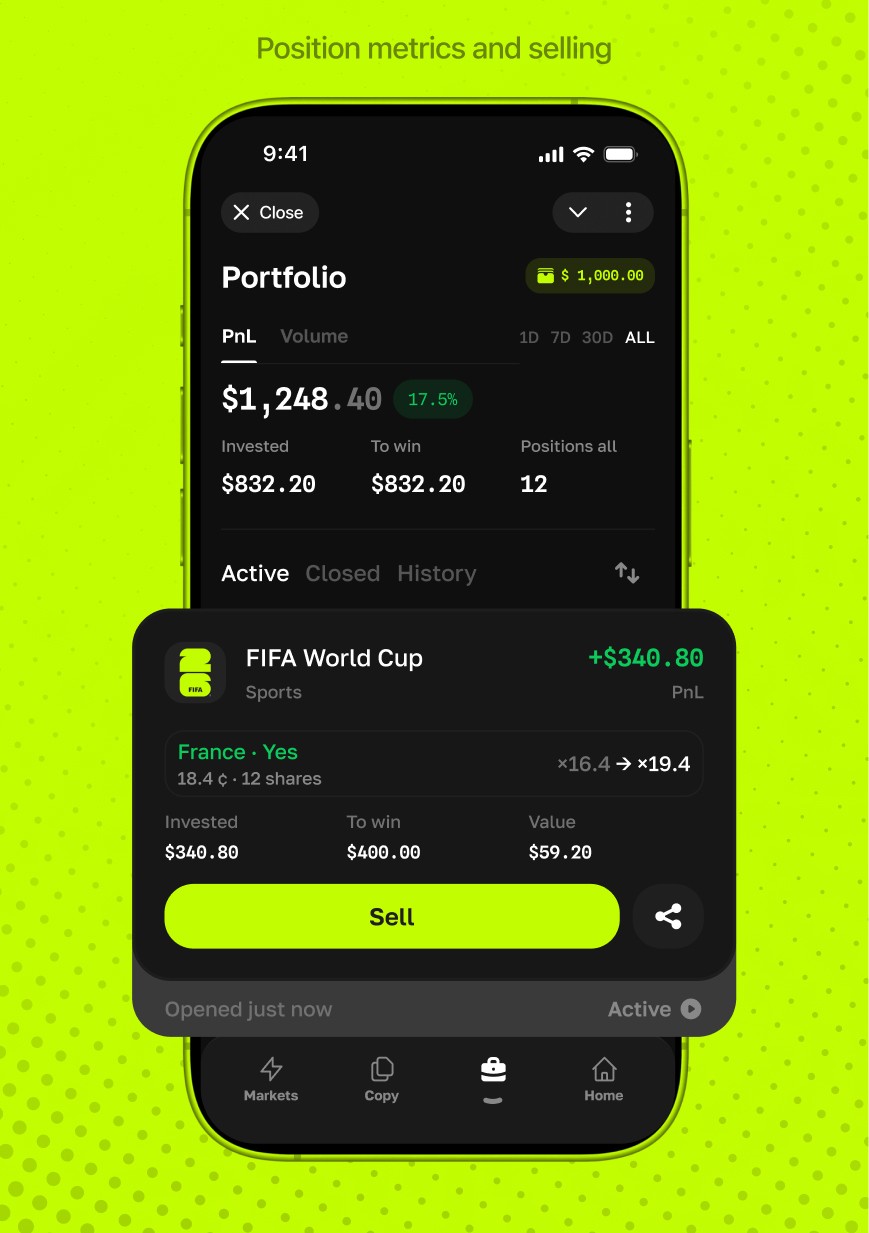

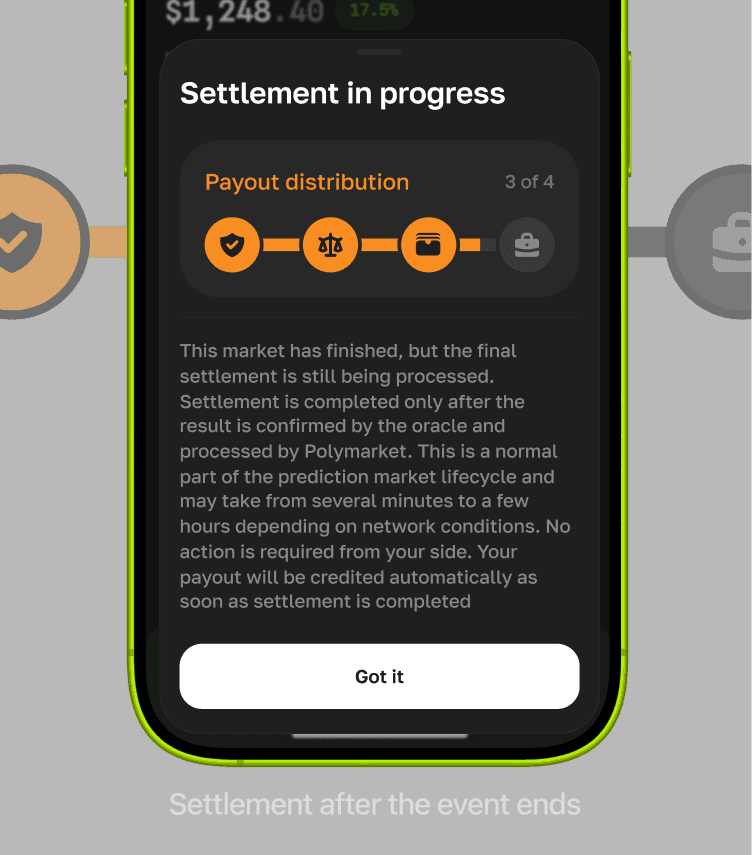
Analysis in the context of an event
AI analysis opens from the event’s detail page. Users can select a suggested question, review the arguments for different outcomes, and continue the conversation with follow-up questions. The chat retains the context of the selected market.
We designed the entry point, response presentation, and access states. Portex Pro combines access to a curated selection of wallets with an allowance of AI analyses. Additional analyses can be purchased once the allowance is used.


VII: (ADDITIONAL FLOWS)
Everyday actions in one app
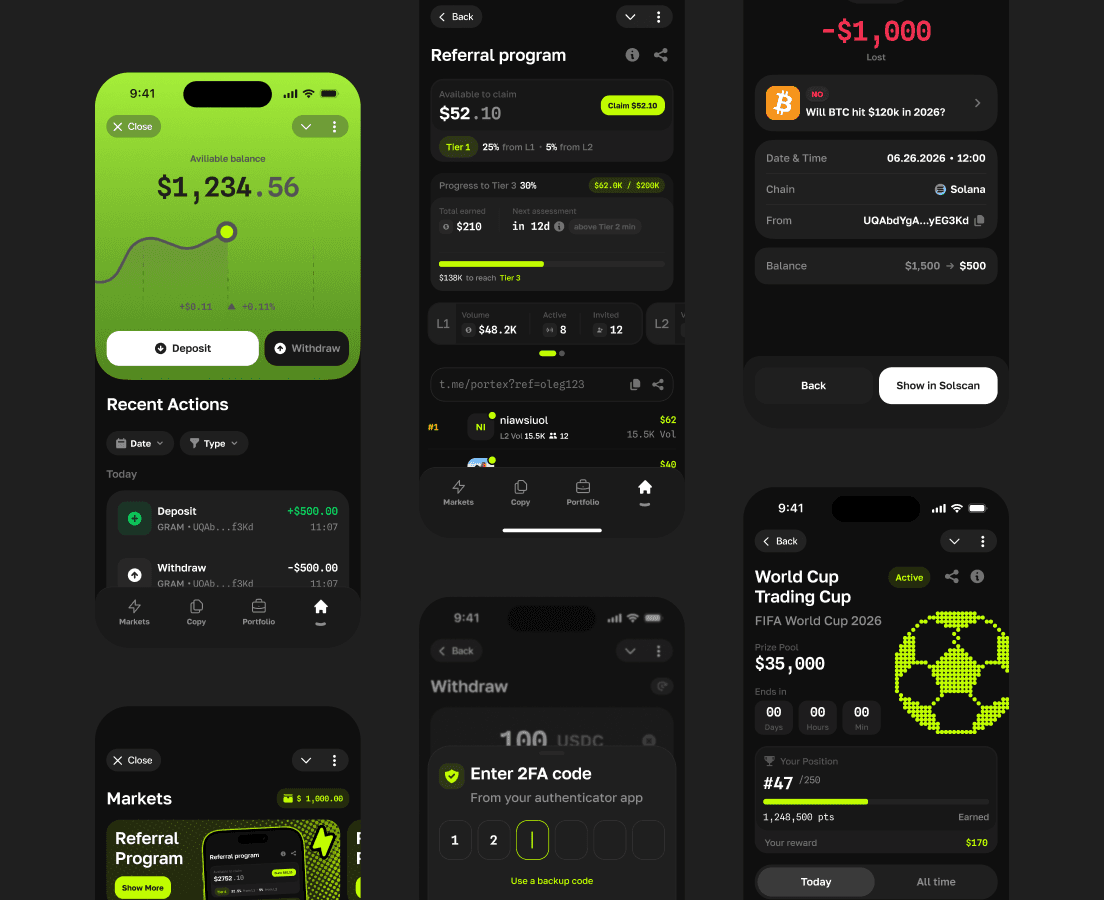
Alongside trading and copy trading, we designed the wallet, deposits and withdrawals, two-factor authentication, the referral program, tournaments, and position sharing. These flows include primary, empty, and intermediate states.

A shared visual language
Alongside trading and copy trading, we designed the wallet, deposits and withdrawals, two-factor authentication, the referral program, tournaments, and position sharing. These flows include primary, empty, and intermediate states.
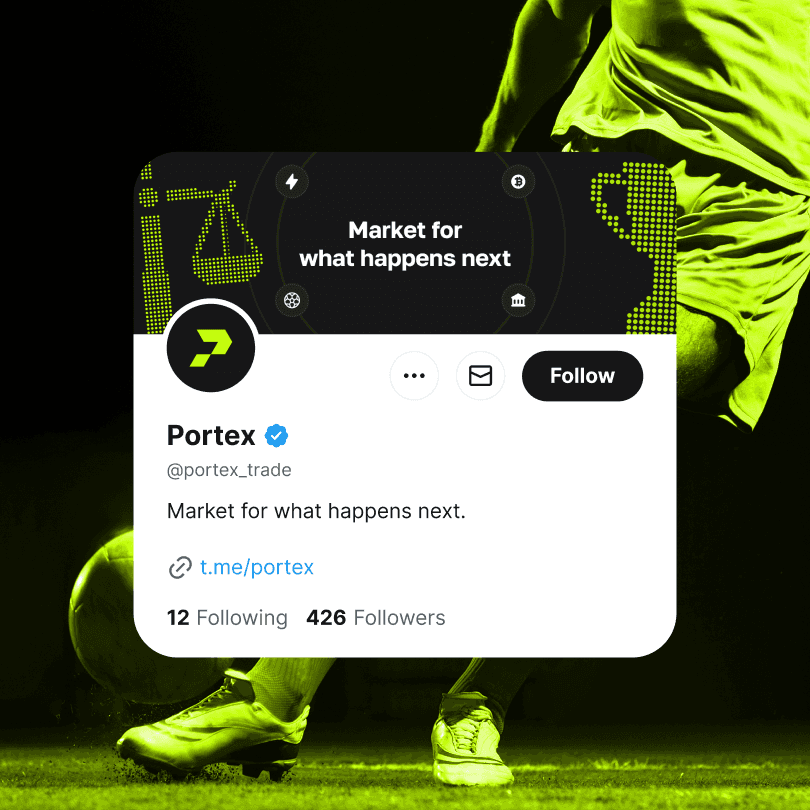
Neon Green
Gray
Charcoal
White
Neutral White
Golos
Used for all headings and body text


IX: (OUTCOME)
From initial designs to a live product
We began working on Portex in May 2026. The first version launched ahead of the FIFA World Cup, and the product continued to evolve after launch.
Our work covered direct trading, Copy Trading settings and execution monitoring, position management, AI analysis, and supporting flows. All features shown in this case study are live.